Buy ejcem.eu ?
We are moving the project
ejcem.eu .
Are you interested in purchasing the domain
ejcem.eu ?
domain@kv-gmbh.de · 0541-91531010
Buy ejcem.eu ?
What is an isometry with non-orthogonal corners?
An isometry with non-orthogonal corners is a transformation that preserves distances and angles, but the corners of the shape are not at right angles to each other. This means that the shape is still congruent to its original form after the transformation, but the angles at the corners are not 90 degrees. Isometries with non-orthogonal corners can include rotations, reflections, translations, and glide reflections. These transformations are important in geometry and can be used to study the properties of shapes and figures. **
What is an isometry with non-orthogonal vertices?
An isometry with non-orthogonal vertices is a transformation that preserves distances and angles between points, but the vertices are not at right angles to each other. This means that the shape is still congruent to its original form, but the angles between the edges are not necessarily 90 degrees. Isometries with non-orthogonal vertices can include translations, rotations, reflections, and glide reflections. These transformations are important in geometry and can help us understand the properties of shapes in different orientations. **

Similar search terms for Non-orthogonal
Top-Angebote
Products related to Non-orthogonal:
-
Ember Modern Outdoor Sconce Non-solar / Warm White (3000k) MOD LIGHTINGEmber is a perfect blend of modern design and durable functionality, created to add a sleek and sophisticated touch to any exterior wall. Crafted from high-quality stainless steel, this wall sconce promises durability while exuding a refined aesthetic.279,95 $*Shipping: 0,00 $Secure redirect to the provider
-
Haven Modern Outdoor Sconce Non-solar / Warm White (3000k) MOD LIGHTINGHaven is the epitome of modern sophistication, designed to bring a sleek and stylish touch to any exterior wall. Crafted from premium stainless steel, this wall sconce offers durability and a refined aesthetic that seamlessly complements...429,95 $*Shipping: 0,00 $Secure redirect to the provider
-
Dawn Modern Outdoor Sconce Non-solar / Warm White (3000k) MOD LIGHTINGBrighten your exterior with Dawn, a perfect blend of modern design and minimalist elegance. Its minimalist and sleek profile brings a touch of contemporary sophistication to any wall, creating a subtle yet impactful statement. Made from durable...169,95 $*Shipping: 0,00 $Secure redirect to the provider
-
Inspire Daily Merch Durable Reusable Pet Hair Removal Dryer Balls Non Electric Lint Catcher For Laundry Washing Accessories Durable Reusable Pet Hair Removal Dryer Balls Non Electric Lint Catcher For Laundry Washing AccessoriesEfficient Pet Hair Removal for Laundry Say goodbye to pet hair stuck in your laundry! The 6pcs Reusable Pet Hair Removal Laundry Balls are designed to effortlessly capture and remove pet hair from your clothes during laundry cycles. Whether you're...29,97 $*Shipping: 0,00 $Secure redirect to the provider


-
What is an orthogonal vector?
An orthogonal vector is a vector that is perpendicular to another vector. In other words, two vectors are orthogonal if their dot product is zero. Geometrically, this means that the two vectors form a 90-degree angle with each other. Orthogonal vectors are important in many areas of mathematics and physics, including linear algebra and vector calculus. **
-
Are linearly independent vectors always orthogonal?
No, linearly independent vectors are not always orthogonal. Linear independence means that no vector in the set can be written as a linear combination of the others, while orthogonality means that the vectors are perpendicular to each other. It is possible for linearly independent vectors to be orthogonal, but it is not a guarantee. For example, in three-dimensional space, the vectors (1, 0, 0), (0, 1, 0), and (0, 0, 1) are linearly independent and orthogonal, but the vectors (1, 1, 0) and (0, 1, 1) are linearly independent but not orthogonal. **
-
What does the term orthogonal mean?
The term orthogonal refers to two things being perpendicular or at right angles to each other. In mathematics, it often refers to vectors or matrices that are perpendicular to each other. In a broader sense, it can also refer to any two things that are independent or unrelated to each other. **
-
When are planes and lines orthogonal?
Planes and lines are orthogonal when the line is perpendicular to the plane. This means that the line forms a 90-degree angle with the plane, creating a right angle. In other words, the direction of the line is perpendicular to the direction of the plane. This relationship is important in geometry and engineering, as it affects the intersection and orientation of different geometric elements. **

What is a proof of two orthogonal?
Two vectors are considered orthogonal if their dot product is equal to zero. This means that the angle between the two vectors is 90 degrees, forming a right angle. Mathematically, if vectors u and v are orthogonal, then u · v = 0. This property can be used to prove that two vectors are orthogonal by calculating their dot product and showing that it equals zero. **
What is a proof for two orthogonal?
Two vectors are orthogonal if their dot product is zero. This can be proven by calculating the dot product of the two vectors and showing that it equals zero. If the dot product is zero, it means that the vectors are perpendicular to each other, which is the definition of orthogonality in Euclidean space. **
Top-Angebote
Products related to Non-orthogonal:
-
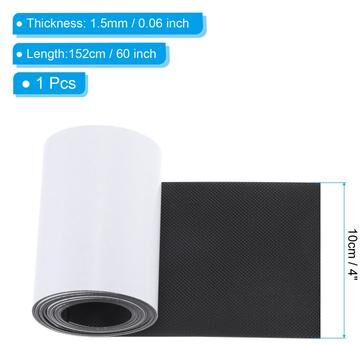
Unique Non Slip Furniture Pads, Cuttable Self Adhesive Floor ProtectorThe furniture anti-skid pads can be applied to various furniture such as table legs, doors, chairs, sofas, vases, speakers, laptops, cabinets, drawers, keyboards, equipment, frames, home appliances, and more.25,99 $*Shipping: 0,00 $Secure redirect to the provider
-
Ember Modern Outdoor Sconce Non-solar / Warm White (3000k) MOD LIGHTINGEmber is a perfect blend of modern design and durable functionality, created to add a sleek and sophisticated touch to any exterior wall. Crafted from high-quality stainless steel, this wall sconce promises durability while exuding a refined aesthetic.279,95 $*Shipping: 0,00 $Secure redirect to the provider
-
Haven Modern Outdoor Sconce Non-solar / Warm White (3000k) MOD LIGHTINGHaven is the epitome of modern sophistication, designed to bring a sleek and stylish touch to any exterior wall. Crafted from premium stainless steel, this wall sconce offers durability and a refined aesthetic that seamlessly complements...429,95 $*Shipping: 0,00 $Secure redirect to the provider
-
What is an isometry with non-orthogonal corners?
An isometry with non-orthogonal corners is a transformation that preserves distances and angles, but the corners of the shape are not at right angles to each other. This means that the shape is still congruent to its original form after the transformation, but the angles at the corners are not 90 degrees. Isometries with non-orthogonal corners can include rotations, reflections, translations, and glide reflections. These transformations are important in geometry and can be used to study the properties of shapes and figures. **
-
What is an isometry with non-orthogonal vertices?
An isometry with non-orthogonal vertices is a transformation that preserves distances and angles between points, but the vertices are not at right angles to each other. This means that the shape is still congruent to its original form, but the angles between the edges are not necessarily 90 degrees. Isometries with non-orthogonal vertices can include translations, rotations, reflections, and glide reflections. These transformations are important in geometry and can help us understand the properties of shapes in different orientations. **
-
What is an orthogonal vector?
An orthogonal vector is a vector that is perpendicular to another vector. In other words, two vectors are orthogonal if their dot product is zero. Geometrically, this means that the two vectors form a 90-degree angle with each other. Orthogonal vectors are important in many areas of mathematics and physics, including linear algebra and vector calculus. **
-
Are linearly independent vectors always orthogonal?
No, linearly independent vectors are not always orthogonal. Linear independence means that no vector in the set can be written as a linear combination of the others, while orthogonality means that the vectors are perpendicular to each other. It is possible for linearly independent vectors to be orthogonal, but it is not a guarantee. For example, in three-dimensional space, the vectors (1, 0, 0), (0, 1, 0), and (0, 0, 1) are linearly independent and orthogonal, but the vectors (1, 1, 0) and (0, 1, 1) are linearly independent but not orthogonal. **
Similar search terms for Non-orthogonal
-
Dawn Modern Outdoor Sconce Non-solar / Warm White (3000k) MOD LIGHTINGBrighten your exterior with Dawn, a perfect blend of modern design and minimalist elegance. Its minimalist and sleek profile brings a touch of contemporary sophistication to any wall, creating a subtle yet impactful statement. Made from durable...169,95 $*Shipping: 0,00 $Secure redirect to the provider
-
Inspire Daily Merch Durable Reusable Pet Hair Removal Dryer Balls Non Electric Lint Catcher For Laundry Washing Accessories Durable Reusable Pet Hair Removal Dryer Balls Non Electric Lint Catcher For Laundry Washing AccessoriesEfficient Pet Hair Removal for Laundry Say goodbye to pet hair stuck in your laundry! The 6pcs Reusable Pet Hair Removal Laundry Balls are designed to effortlessly capture and remove pet hair from your clothes during laundry cycles. Whether you're...29,97 $*Shipping: 0,00 $Secure redirect to the provider
-
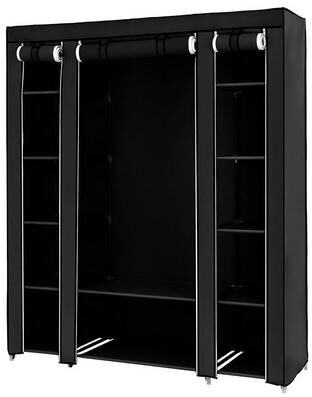
karlinc Portable Clothes Closet Non-Woven Fabric Wardrobe Storage Organizer BlackFeatures: STURDY & DURABLE CONSTRUCTION: Made from Selected Non-woven Fabric Cover, Water-Proof Fabric Tiers, High Quality Steel Tube and PP Plastic Connectors, This Portable Storage Closet Will Meet Your Long Term Storage Needs.33,92 $*Shipping: 0,00 $Secure redirect to the provider
-
Haven Modern Outdoor Sconce Non-solar / Warm White (3000k) MOD LIGHTINGHaven is the epitome of modern sophistication, designed to bring a sleek and stylish touch to any exterior wall. Crafted from premium stainless steel, this wall sconce offers durability and a refined aesthetic that seamlessly complements...429,95 $*Shipping: 0,00 $Secure redirect to the provider
-
What does the term orthogonal mean?
The term orthogonal refers to two things being perpendicular or at right angles to each other. In mathematics, it often refers to vectors or matrices that are perpendicular to each other. In a broader sense, it can also refer to any two things that are independent or unrelated to each other. **
-
When are planes and lines orthogonal?
Planes and lines are orthogonal when the line is perpendicular to the plane. This means that the line forms a 90-degree angle with the plane, creating a right angle. In other words, the direction of the line is perpendicular to the direction of the plane. This relationship is important in geometry and engineering, as it affects the intersection and orientation of different geometric elements. **
-
What is a proof of two orthogonal?
Two vectors are considered orthogonal if their dot product is equal to zero. This means that the angle between the two vectors is 90 degrees, forming a right angle. Mathematically, if vectors u and v are orthogonal, then u · v = 0. This property can be used to prove that two vectors are orthogonal by calculating their dot product and showing that it equals zero. **
-
What is a proof for two orthogonal?
Two vectors are orthogonal if their dot product is zero. This can be proven by calculating the dot product of the two vectors and showing that it equals zero. If the dot product is zero, it means that the vectors are perpendicular to each other, which is the definition of orthogonality in Euclidean space. **
* All prices are inclusive of VAT and, if applicable, plus shipping costs. The offer information is based on the details provided by the respective shop and is updated through automated processes. Real-time updates do not occur, so deviations can occur in individual cases. ** Note: Parts of this content were created by AI.